
Largest Forests Found on the Prairies?
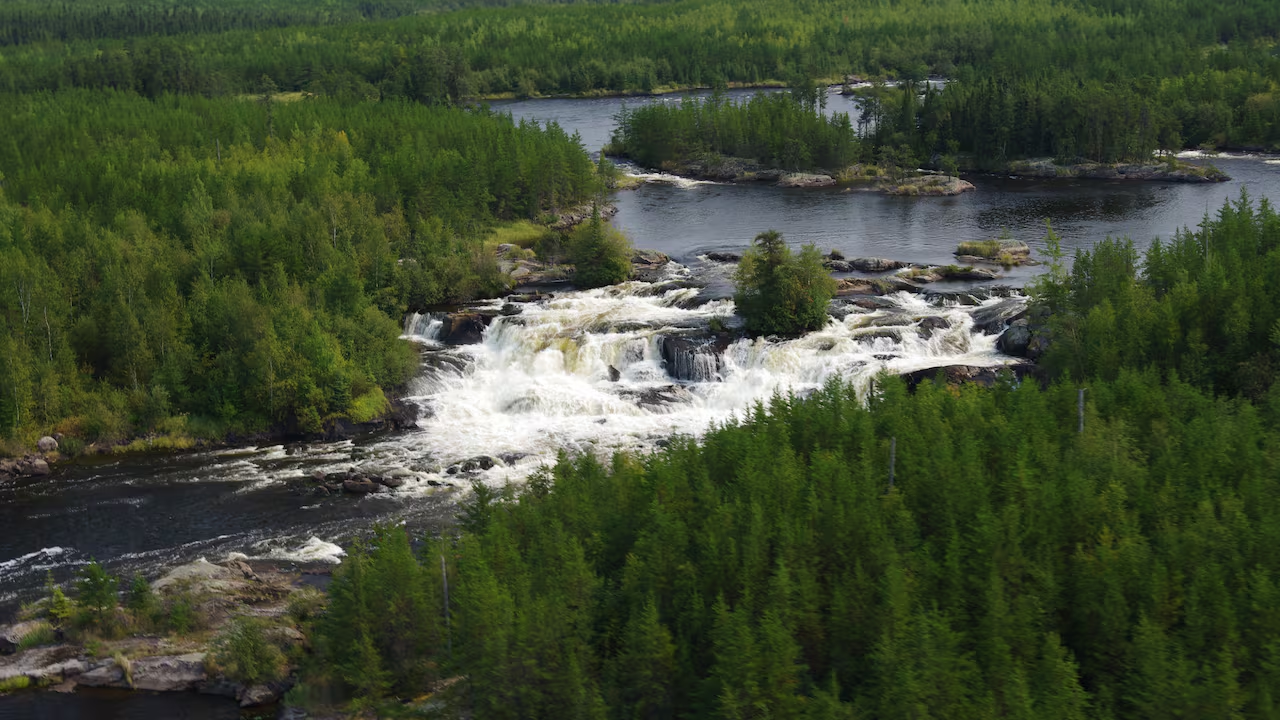
Manitoba is a prairie province, which means no trees, right? Absolutely wrong. In fact, Manitoba boasts of more than 56-63 million hectares of forest, or about 48-57% of is land mass.
Of course, we share the world’s largest intact forest in the boreal forest, running from British Columbia to Labrador.
That forest has incredible value to the world and to the stabilization of the environment and weather. It is part of the “Family of Five,” the five regions in the world that comprise 25% of the world’s unspoiled forests. The others include the Amazon, the Russian Boreal Forest, the Congo Basin, and the Forests of Borneo & New Guinea. It is a vital breeding ground for birds and wildlife. Its peatlands and soils store incredible amounts of carbon.
Winnipeg Claims Largest Urban Elm Forest in Canada
But, as paradoxical as being a major environment for forests in a prairie, Manitoba offers further unique flora claims to fame. Winnipeg has the largest urban elm canopy in North America, with nearly 200,000 trees in a city of under 800,000 people. Winnipeg also has the largest natural urban forest in Canada.
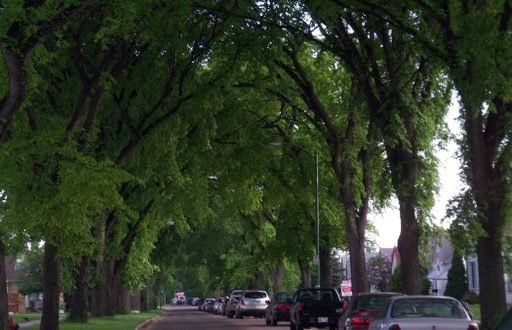
The Assiniboine Forest covers over 285 hectares, and sits adjacent to the Assiniboine Park, the Assiniboine Zoo and, of course, the Assiniboine River.
What makes this forest preserve particularly odd is that it actually exists because it was slated for urban development in the 1920s, but the 1929 stock market crash ended those plans.
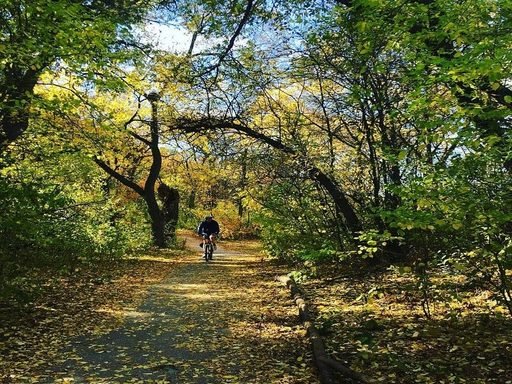
Our elm forest canopy provides classic archways along residential streets. These canopies protect the pavement from excess sun and heat that damages pavement. The elms help mitigate temperature extremes, modulate humidity and deaden sound of busy roadways.
But, like the Assiniboine Forest, the elm canopy had a human hand to guide it. In the early 1900s, the city’s parks superintendent, David England, distributed thousands of elm seedlings each year for planting. Because of our flat terrain, the trees grew well and uniformly, creating the lush overhead cover for which parts of the city are well-known. Being a prairie made it very easy for man to grow a forest in the city.
Largest Forests Found on Prairies?
Surrounding the city, though, are even more forests. Beaudry Park, also on the Assiniboine, is home to masses of trees and bushes, along the river. Birds Hill Park is an oasis of trees and grassy areas just north of Winnipeg. Throughout these parks, kilometers of walking paths keep Manitobans active.
Still more forested areas cover the city, with St Vital Park, Assiniboine Park, Bunn’s Creek Park, the Bois de Esprits and Kildonan Park providing both managed (groomed) and natural woods. Throughout these protected areas, hiking paths abound.
These few forested areas in a prairie province are not a comprehensive list of Manitoba’s treed areas. Indeed, we have 15 designated provincial forests. Along with Riding Mountain National Park, various regions have thousands of acres of forest and wooded areas. It seems we are a prairie province in name only, with more woods than grasslands!