
Manitoba’s Founding Nations (First Nations)
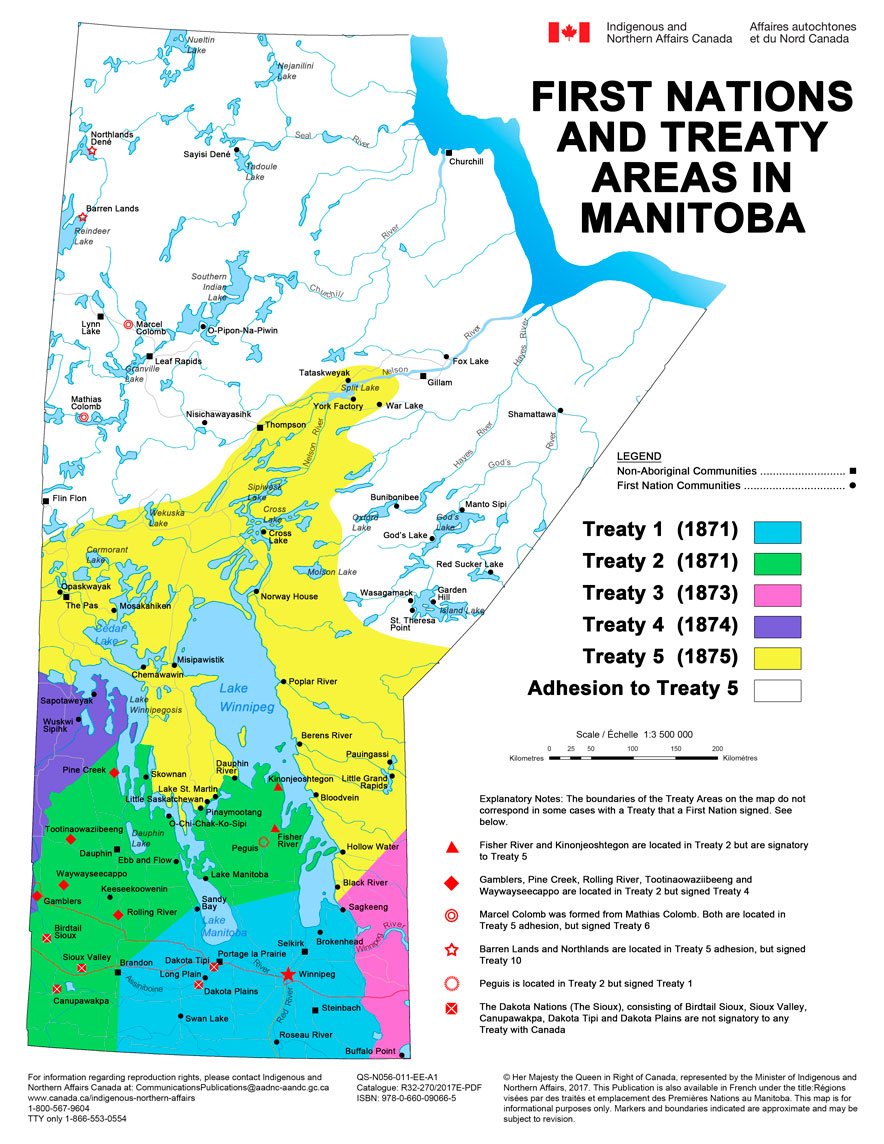
Manitoba’s cultural and ethnic diversity begins with its founding nations. Actually, “founding nation,” not nations, since the entire North American continent, historically referenced by the indigenous population as Turtle Island, has been home to the First Nations people for between 23,000 to 30,000 years. The First Nations people may be constituted of different tribes and bands, but the indigenous population called Turtle Island home for 40 to 60 times as long as any white settler.
Metis Also a Founding Nation
However, Manitoba also owes its existence and, substantially, its identity to the Metis people. Initially, “Metis” referred to a mix of indigenous and Scottish or French people, but the term, “Metis” evolved to include a blend of European (including English) and First Nations ancestry. The Metis officially hold status as a founding nation for Manitoba. They are the only indigenous group so recognized by the government.
While the Indigenous, French and British people officially hold status as the founding nations of Canada, Manitoba also is officially bilingual. The two official languages are French and English, but Manitobans speak scores of languages and dialects.
History of Two Founding Nations
The history of interaction between white immigrants (settlers) and First Nations people is troubled. From exploitation to occupation to subjugation, indigenous populations endured unfair treatment at the hands of pioneers and settlers. Yet, Manitoba’s history primarily is non-violent, particularly compared to the Dakotas and USA in general. The role of First Nations bands is one of cooperation and assistance, without reciprocation.
Today, Manitoba has 376 First Nations reservations, made up of 63 First Nations tribes.
The Metis do not hold any territory as their own, similar to First Nations reserves. However, the federal government, via the Manitoba Act (1870) agreed to set aside 1.4 million acres for the Metis. This promise largely was unkept. Some towns, like St Laurent, have significant numbers of Metis at their core.
In Manitoba, the French began populating the province during the fur trade era. Many towns in the province still have substantial (some have majority) French populations. St. Boniface, in Winnipeg, is largely francophone still. Other centres include St Lazare, St. Malo, St. Pierre-Jolys, La Broquerie, and others.