Is There Racism in Manitoba? Is it Severe?
No. And perhaps. The complexion of racism and the perception of what racism may be can be quite complex and nuanced. What one may see as racism may have a different fundamental structure than our usual definition of prejudice, bias and racism. Even more confounding is that perceived racism in Manitoba springs up in unlikely places. It manifests in unusual ways. Very problematic is that many Manitobans do not view themselves as racist.
Racism, bias and prejudice may not be the same, but they have underlying commonalities. And, often to avoid being labelled as a racist action, perpetrators may point to a different interpretation of their (or others’) actions. Still, Manitoba experiences racism, but acts of violence based on racism are not relatively common.
Racism In Manitoba Focused on Indigenous Populations
Oddly, Asian communities in Canada report more acts of racism than in the USA. Yet Black populations report lower levels. And while American racist acts tend to be more overt, much of Canada’s racist acts tend toward passive aggressive behaviour. In part, reported acts and statistical data may be unreliable, since Canada actively encourages reporting of racist activities. The emphasis on freedom of speech in the US means that fewer verbal aggressions qualify as racism or hate crime. In Canada, hateful words can rise to the level of criminality.
These qualifiers to the question of whether racism in Manitoba is prevalent set the groundwork for a more thorough examination of racism, bias and prejudice in the province. But there is a more important qualifier. Canadians, in general, are looking for ways to improve relations. Outsiders perceive Manitoba as very welcoming of immigrants of colour, largely due to the province’s proactive approach to helping newcomers become a vital element of Manitoba and due to the high proportion of non-white first- second- and third-generation Manitobans.
Is It Really Racism (or Is It Ignorance?)
Of course, another aspect of racism is perceived racism versus actual racism. Years ago, I worked as an investigator for a large retail chain. I apprehended to First Nations women who had stolen a very significant amount of electronics. They loudly accused me of being an anti- “Indian”(sic) racist. A bystander accused me of the same. Yet, they had been so terrible at shoplifting that I could not have failed to observe them!
Was I racist? My company later was involved in a study that compared rates of apprehension base on perceived race and sex to general shopper demographics in the select retailers. The researchers actually found that my team was less likely to apprehend people of colour than the white population! Yet, the two thieves and the bystander both saw my actions as racist.
Many people accused of bias or discrimination cite other reasons for the actions that were labelled racist by either the victim or someone else. Many people who have been subjected to actions from employment discipline to refusal of service cite prejudice as the cause. They are reluctant to acknowledge their own role. Ultimately, some of the reports of racism were not instances of racism and some of the denials of prejudiced action were racism-based.
But where racism and bias exposes itself can be peculiar. I worked with a colleague and friend who was Chinese/Ojibwe, while I am a real “mongrel,” with Jewish and Gypsy ancestry. Our work took us to numerous northern remote First Nations reserves (in my mind, a very overt demonstration of racist paternalism by the British and Canadian governments). In every reserve, there was a Metis community just outside the reserve boundary. Often, these homes were substandard, even by the standards of the particular reserve.
Racism in Unusual Places?
I also met many of the residents in the Metis (a mixed First Nation and white ancestry) and First Nations communities. Some of the First Nations viewed the Metis as inferior or undesirable, and some of the Metis felt that they were subject to racism.
Yet, even though both likely were correct, there were more nuances to the situation. For one, the Indian Act and local governance prohibited or limited the ability of the band to allow non-Indians to live in and benefit from the funding provided to that reserve. Second, availability of funds for building (and materials themselves) continued to that substandard housing. Third, the Metis community generally interacted with the First Nations as if there were no disparities.
On a near-northern reserve not far from The Pas, a 92-year-old woman, known as “Granny Buck” celebrated a milestone, having been midwife to 125 babies on the reserve. Except she was Metis, completely accepted by the adjacent reserve as one of them.
Subjective Racism?
But about my friend of Chinese/Ojibwe descent…. In our discussions, we talked about the bias she experienced growing up on the First Nations rezerve, being half Chinese. It was eye-opening.
Then she asked about my ancestry. Scottish, Icelandic, Welsh, Jewish, Gypsy.
“Romanie,” she interjected.
I hesitated, then answered, “Gypsy.” I was proud of it.
“Romanie,” she repeated. “You can’t use the word, ‘Gypsy.’ It’s racist.”
I thought, “I’m the Gypsy. I can call myself what I want.” I didn’t say it. Apparently, I would have been racist if I repeated the word. Sometimes, racism is in the mind of the beholder.
Celebrating Ethnic and Cultural Diversity in Manitoba
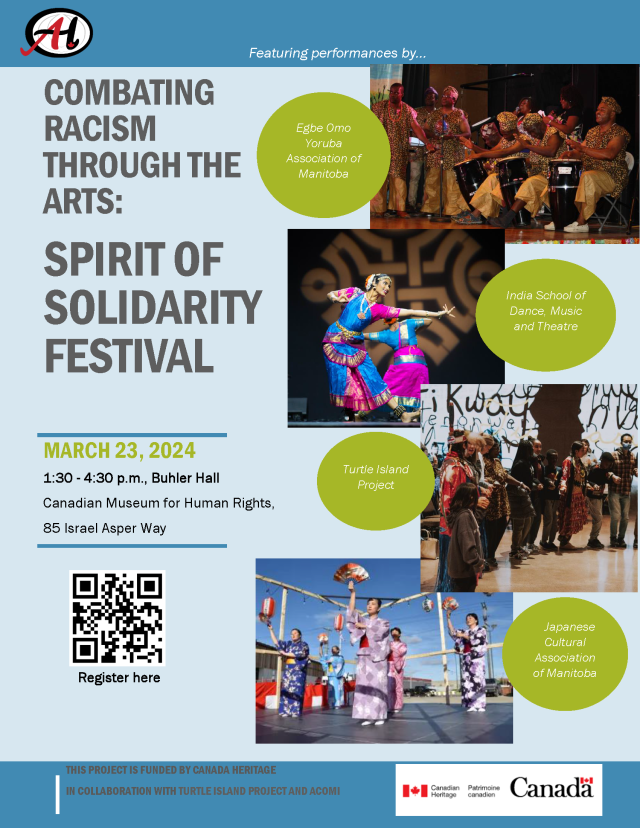
In Manitoba, we hold an annual celebration of our cultural diversity with Folklorama, a two-week party involving 45 or more pavilions representing many of the different ethnic communities in the province. Nearly half a million people visit these pavilions, in a province of rough 1.25 million people. Major tourist attractions include individual communities celebrating ethnic diversity. Several First Nations hold powwows that welcome not-native attendees.
Immigrants comprise more than 23% of Manitoba’s population. Among them, Filipino, South Asian and Black communities comprise the largest visible minority groups. They arrive in Manitoba to discover that they are encouraged to celebrate their roots and culture.
Yet, at the same time, long-time, usually white Manitobans do not extend the same inclusive offer to the founding First Nations and Metis. Instead, they commonly complain about what they perceive as preferential and unbalanced treatment of the aboriginal and founding nations. That resentment both results from and contributes to prejudice and covert, passive-aggressive racist attitudes.
Manitoba’s government operates the Newcomer Welcome and Inclusion Strategic Frameworks to build anti-racist, equitable municipal services. With Canada’s only premier identified as First Nations (not including the northern territories), we are striving to improve aboriginal/white relations.
Missing and Murdered Indigenous Women
But one of our most prevalent manifestations of prejudice is not violence precipated by racism, but violence that occurs against specific races. Our Missing and Murdered Indigenous Women cases comprise 21% of cases nationally. Our share of First Nations people is higher than most provinces, but the huge volume of indigenous missing women and those women that are trafficked represent 50% of all female human trafficking victims. There are other contributors to the statistic, including the high number First Nations females involved in the sex trade, but the very poor statistic (67%) regarding unsolved cases speaks to the depth of bias.
Much of the reporting regarding bigotry, prejudice and racism in Manitoba has little to do with actual racism and more to do with the laws regarding hate speech and inciting hatred.
The Americans generally require that claims of discrimination be accompanied by proof of discriminatory intent. This is a high bar. The USA places extreme emphasis on freedom of speech, to the detriment of victims of racism. In Canada, we criminalize the wilful promotion of hatred. This protection encourage people who feel victimized to come forward, resulting in a much higher statistical rate of known racist activity. In other words, because we are so focused on deterring and responding to racism, we actually seem to have a very high level of prejudice.
Efforts to Reduce and Overcome Racism in Manitoba
While Manitoba’s racism may be more passive-aggressive, there is another angle to the conversation. Many people and businesses report that they have, while admitted feelings of bias (particularly against First Nations), have chosen to not act on it. Some even concede that the social stigma of being labelled racist led them to select a non-white candidate in preference to a white one.
Then again, there is the issue of prejudice against physically handicapped. Here, Manitoba does very well, largely due to the work of the NDP “socialist” government, which actively pursues ways to include handicapped, aged and limited-capacity citizens to integrate well into the communities.
Generally, Manitobans embrace people of all religions, orientations and race. Yet, a few “old-school” inflexible residents aggressively seek to disrupt racial integration and harmony. They get the attention. They conduct an inordinate amount of the racial incidents. But they do not represent Manitobans.
The majority of Manitobans see racism as a problem. That tells an interesting story. If most of us recognize it as an issue, we, in our hearts, want to remedy that disparity. That, in turn, suggests that we are far less racist than the image that we portray to the rest of the country. And it suggests that we want to improve.
We have issues with racism, bigotry and prejudice in Manitoba. But, from employers to neighbours, we are evolving, finding better ways to embrace our differences, celebrate our uniqueness, and enjoy our shared values.