Manitoba Fall Frenzy, Manitoba Autumn Magic
It’s mid-August in Manitoba, and the annual Manitoba fall frenzy is in full swing. Our autumn magic begins as early as June, but it is only the human-induced frenzy. From mid-August to early November, our third season, and arguably our prettiest, races into winter. It combines the frenzied activity of people or animals preparing for snow, the magical dance of our local flora readying for dormancy and our weather warning us of the extreme to soon arrive.
Retailer Fall Frenzy
Of course, retailers dictate much of the human panic as fall approaches. Back-to-school displays adorn store shelves from early June onward, a full month before the prior school year has ended. Unlike the USA, we return to school just after Labour Day, but marketing reaches a peak of frenzy by mid-July. Almost disappointingly, Hallowe’en and even Christmas displays show up in late August. Shoppers respond.
Then, teachers re-enter schools at the beginning of August to set up the new year’s curriculum.
Clothes buying flurries start almost as soon, months before the snow flurries arrive.
Summer Vacations Before Autumn
This is not all of the human whirl of heightened activity. The last week of July to the second week of August see the peak summer vacationing times, and traffic on the highways and roads across and through the province multiply. Most of the roads to and from cottage country experience daily rushes of traffic.
It’s the time to make the most of warm sunny days, even though there is more sun in winter per daylight hour.
Manitoba’s Weather Previews Its Autumn Magic
Meanwhile, Manitoba weather has its own agenda. Rainy periods (recently torrential rainfall) occurs through June into very early July, followed by a month-long dry spell. But, almost cynically, rain returns just as farmers are harvesting grain crops. The grass that flourished in May to mid-July abruptly stops growing. Fields of grain—yellow canola, blue flax, green grains, orange/yellow sunflowers–yield to tan, brown and dark brown. The rush to shed their green contributes to the fall frenzy of changes.
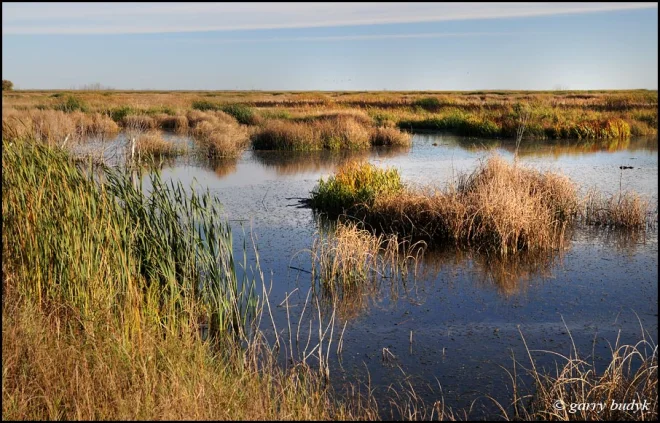
If the summer has been particularly dry, many of the shrubs and plants along wooded area margins brown out, and a few trees, such as poplar might begin to yellow, too.
Lakes and Creeks Display Their Autumn Magic
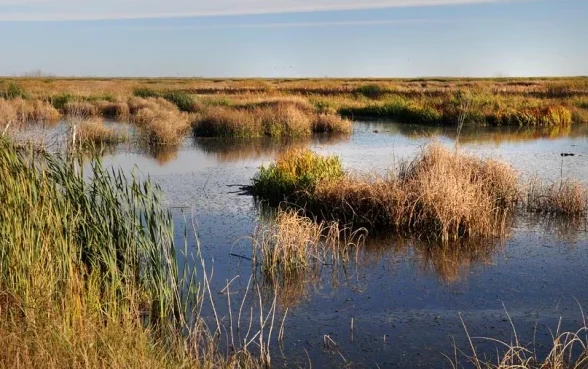
Creeks that bubbled with runoff now may dry almost completely. Even lakes and ponds may appear to shrink. Sometimes, it’s because of drought, but often it is because water contracts as it gets cooler, reaching its most dense point at around 4C (39F), so shorelines appear to retreat.
That allows for a fascinating visual and auditory phenomenon: thermal inversion (thermal stratification or lake turnover). Both in spring and fall, top layers of water switch with lower layers. In the autumn, as the surface temperature of the lake cools, it becomes denser. Meanwhile, the warmer, lower level wants to rise, like warm air and water do. If the lake is relatively calm and there is not a high ratio of fresh water to resident water, that surface layer can remain in place for weeks, cooling to near 4C.
Then, without warning, the two layers switch places. Often, it is visible, appearing like a wave, or the emergence of a beast from beneath the surface. The sound of the water flipping sounds like a long wave on an ocean shore. Then, the surface returns to calm. The date, the time and even the actual occurrence are unpredictable, so, often, it is only locals who get to experience it.
Now, freezing can begin to set in, with the shores seeing thin ice arrive and depart daily for weeks in September and October.
Plants Get In On the Autumn Magic Display
While the waters of Manitoba undergo their own autumn magic, our province’s flora have a bit more of a controlled fall frenzy. Varying only by a couple of weeks each year, the leaves begin to change colours. Some hang on tenaciously, with a few species defiantly retaining leaves into early winter, fruit into late winter.
But the leaves of the trees eventually release their grip, often forced to do so by autumn winds. These winds can strip golden and red foliage within hours. They leave formerly noble trees and bushes with bright colours naked and shivering.
Grasses may take much longer, with domestic grasses remaining green until well after freeze-up in late October.
Pumpkins and other vines hate the first frost. In an instant, once the temperature drops below about -2C, all leaves blacken. Within a day, observers from roadsides see bright orange pumpkins standing alone by the hundreds in fields. The wilted leaves have exposed the pumpkins and picking time has arrived.
The Autumn Magic of Water, Snow and Ice
We rarely see snow that lingers until after Hallowe’en in southern Manitoba, but it arrives and sometimes remains in the far north, around Churchill, as early as mid-August.
Still, lake effect from Lake Manitoba and Lake Winnipeg can cause flurries as early as late September. Icy roads caused by lake effect plague commuters from mid-October onward.
But there is an upside to the changing waters. Fishing becomes extraordinary, as the fish, too, participate in the fall frenzy. And, in Manitoba’s 100,00 lakes and thousands of streams, fish abound.
Wildlife Takes Part In the Tumult
Wildlife changes, too. Deer, their fawns now teenagers, crowd into grain and alfalfa fields. All the hooved wildlife begin their frenzied rut, looking for a mate, or mates. Like drunk guys in a bar, the fight for a female is the only important thing. Cars kill more wildlife in the autumn than any other time of the year. Moose and elk form part of their own rutting delirium.
Mice seek warmth, often creeping into homes and buildings. Our “beloved” red-sided garter snakes slither back to their wintering dens. Monarch butterflies begin their multi-generational migration to Mexico.
Birds Show the Most Fall Frenzy
Birds flock and practice flying. Simultaneously, they display ravenous habits, stuffing themselves for the long migrations.
But hummingbirds, which arrive in early to mid-May, all pack up for Mexico, beginning in mid-August. Males arrive first and leave first, with the new generation hanging on until late August or early September. Manitoba has only one species of hummingbird, the Ruby-throated hummingbird. It is enough, since they are endlessly entertaining, incredibly territorial and surprisingly curious.
Of course, our iconic Canada geese dominate the fields and skies, sometimes to the annoyance of locals in the city and farmers. Our hunters are much less abundant than they were in the 1950s and our grain fields more prevalent. Consequently, we now see millions of birds migrate from and through Manitoba. Their gathering together is both part of the fall frenzy and the autumn magic. They find relatives from prior years, joining them as they move south.
Some birds remain loyal and stay all year, like our sparrows. But they, too, with their high reproductive rate, abound in the fall frenzy.
Hibernation, But Not Necessarily Hibernation
Many of our so-called hibernating animals do not hibernate year-round, even though winters can be brutal. In warm spells of mid-winter, bears, skunks, squirrels and others may awaken briefly. But each is ravenous leading up to winter. Squirrels are the most industrious, while bears are the most gluttonous.
Weather Rules The Fall Frenzy in Manitoba
Governing all of the fall frenzy is the weather. First frost in Winnipeg happens around September 23, coincidentally around the first day of official autumn. First snow occurs in late October. But temperatures may drop from lows of 12C at night to near freezing. Daytime highs may drop from the low 20s to 10-12C. But more schizophrenic, one day in September may have a high of 28-30C, and the next a high of 6C. Wind is our constant companion at this time of year. Largely, it is driven by changing patterns in the far north and even Siberia.
But this trend to cool makes outdoor activities much more appealing, and the prevalence of noxious insects is almost non-existent. Still, swimming in our lakes is almost foolhardy. Actually, it may be only for fools! The holidayer traffic falls off on roads. Tourist sites wind down. Hotel, cabin and resort rates plummet. It becomes the perfect time to experience our province and soak up the autumn magic.