Eriksdale Road Trip Adds Unique Experiences
Highway 6 along west Interlake
We’ve been spending a lot of time travelling in EastMan the past several weeks, so we decided to visit my old stomping grounds in the Interlake, taking our road trip across western parts of the region. And there are lots of unique places to experience!
Growing up in Woodlands in the 1960s meant that your travel generally was limited to Winnipeg, Stonewall and sometimes Selkirk. Very rarely, we travelled north to Lundar to visit relatives. We had missed out on a lot!
Our route took us along Highway 6, east along Highway 68, south via Highway 17 and back to Winnipeg following Highway 7. Total travel time, with stops, was just over 5 and a half hours.
Normally, we only stop once for a meal, but today, twice.
Our route takes us northwest of the city, along the eastern edge of Lake Manitoba. Driving past Woodlands, my home town, I’m struck by how much it has expanded in the past fifteen years. Much of that growth is due to new homes owned by the Plymouth Brethern, a very private religious sect. Our first stop, though, is MTT Restaurant, about five kilometers south of St. Laurent.
Manipogo, Metis and Migratory Birds
This restaurant has been operating for fifty years, and serves truckers travelling Highway 6 into northern Manitoba. Many day-trippers from the near dozen First Nations reservations along the way stop by. Beachgoers and cabin owners in Laurentia and Twin Beaches and myriad locals dine here. It always offers an excellent meal, along with a few groceries.
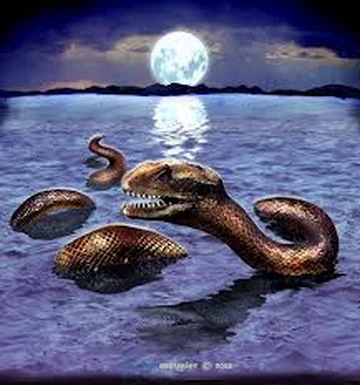
Nearby, Manipogo Golf Course and Manipogo Provincial Park were named for the mythical Manipogo monster of the Lake, a combination of Ogipogo (British Columbia) and the Lock Ness monster. While I have never seen it, others, often well under the influence, swear that they have. However, since Lake Manitoba is less than 20 feet deep at its deepest, this monster must have a fear of deep lakes.
St. Laurent is home to one of the largest Metis populations in the province. It was the town that the Smithsonian Institute turned to for its exhibit on Metis culture.
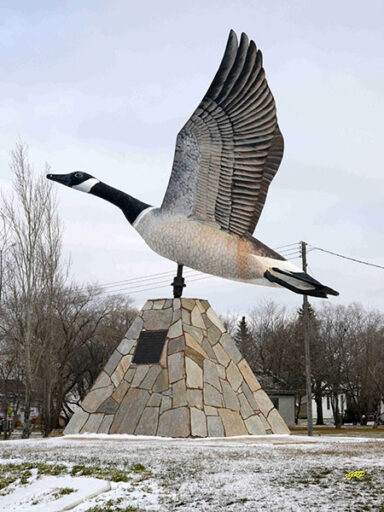
Oak Point is more a point on a map than a town, but there is a motel in the vicinity of where Oak Point should be. But the next town, Lundar, has more to notice. First, It has a giant Canada Goose statue that doubles as a weathervane. Second, it had one of the sallowest, sandiest beaches in the province. Third, it is home to an Icelandic, Scottish and Scandinavian population that settled here after New Iceland was founded in the 1800s, along Lake Winnipeg.
Now, we are at Eriksdale. We briefly stop at Havakeen Lunch at the junction of Hwy 68 and 6. We often eat here, whenever we are travelling through. However, it is merely a washroom break today, and an opportunity to watch the numerous ruby throated hummingbirds feeding at the feeders.
Eriksdale has a museum that sprung from a former creamery, as well as a credit union, garage, decent grocery store and restaurants. Eriksdale has all a person needs on a daily basis.
King Buck and His Cousin, the Moose
Highway 68 crosses the Interlake all the way from Highway 6 to Highway 8 near Riverton (hence, “68”), but we are only travelling to Poplarfield. Here, a giant statue of a deer, “King Buck,” is a popular tourist stop. Across the highway from the king, a combination post office, grocery store and restaurant serves travellers on Hwy 68. The junction sees those travelling north or south from the three First Nations reservations on the route, along with the small communities of Fisher Branch and Hodgson. There’s more: two Hutterite colonies, including Marble Ridge call the area home. King Buck is only one of several large animals in the area. Others include moose and black bear.
We turn south on Highway 17, toward Inwood. This route takes us past the Narcisse Snake Dens, which teem with tens of thousands of red sided garter snakes in mid-spring. It sees thousands of snakes slithering back to their limestone dens in September. The snakes, like almost every animal in the province, are harmless. They are not venomous. And the bears, bobcats, foxes, wolves and coyotes in the Interlake may have fierce reputations. However, there have been no injuries, maulings, deaths or even serious attacks by these animals in recent decades.

I DO Like (Spiders), Mosquitoes & Snakes!
Inwood is an interesting community. It seems to be in the middle of nowhere, but it has a garage, retirement home, school, grocery store and, of course, Rosie’s Restaurant. Just two or three miles north, the Inwood Quarry is home to a garter snake population almost as large as that in Narcisse. A statue in the heart of Inwood shows a ball of snakes entwined.
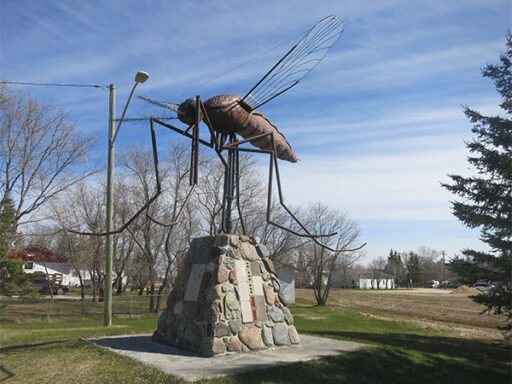
Now we continue past Norris Lake, a small lake in a small provincial park, with a few cabins and camping spots. Just northwest of Teulon, Komarno boasts the largest mosquito statue in the world. Many disagree. They claim that the statue is only a lifesized replica of an actual mosquito in the area.
Food, Friendliness and the Finish!
Hwy 17 meets Highway 7 at Teulon, and it is here where we stop to eat again, There are a couple of great eating places in town, but we opt for the restaurant on the corner of the highway and PR229. It’s just snack time, a drink, ice cream and an order of fries.
Teulon is a relatively sizeable small town, and recently it has seen an influx of people who commute the 55 minutes to Winnipeg each day.
We continue down Highway 7 to Winnipeg, bypassing Stonewall and Stony Mountain. Stonewall is fairly sizeable and we intend to spend a full day there soon. This year, the torrential rains have washed out the strawberry fields where thousands of people pick berries each year, so that trip will have to wait until 2027.
We’re back in Winnipeg, driving our electric vehicle, and did not require a recharge on the entire route.
Next trip? To Altona Sunflower Festival.