
Winnipeg and Capital Region
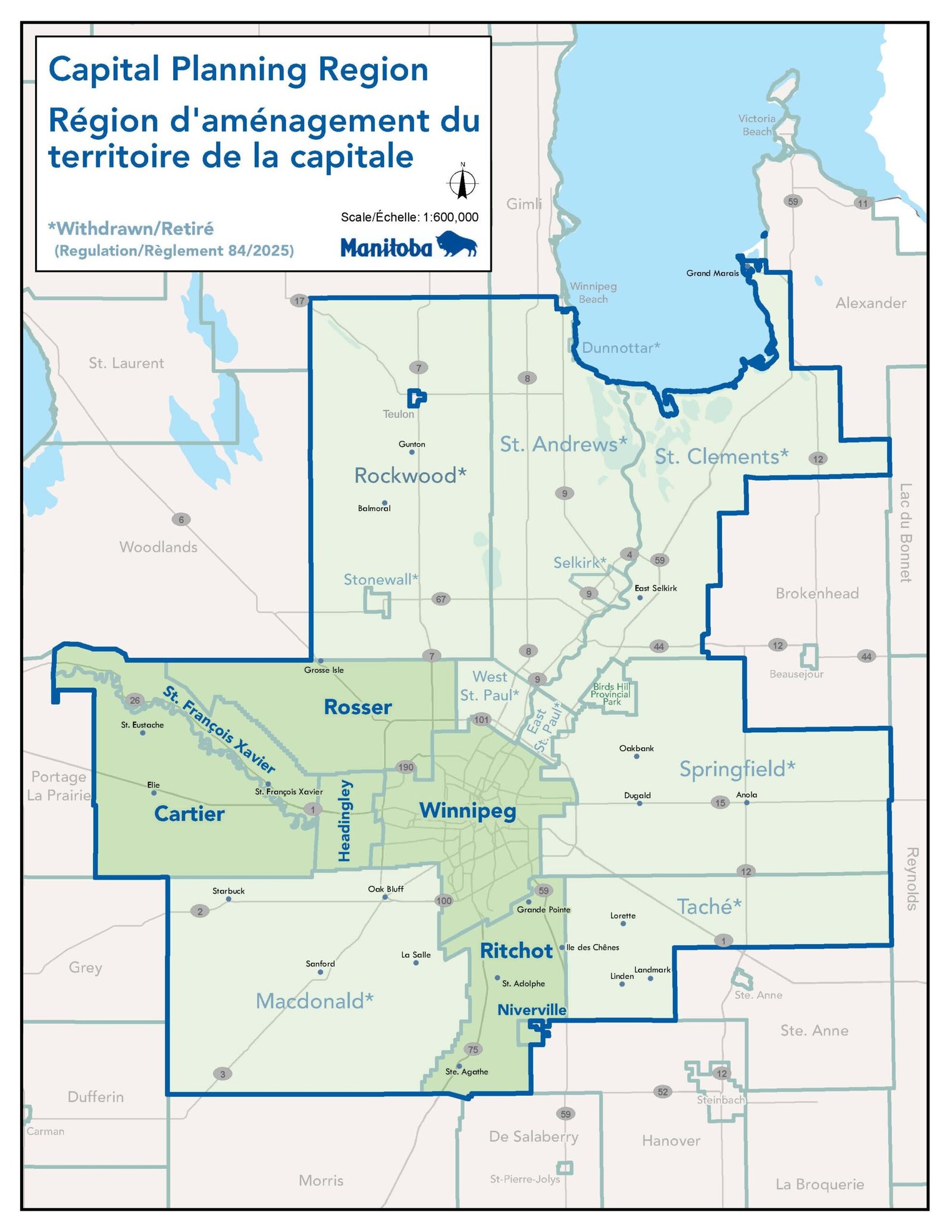
Known as satellite communities, urban/rural fringe, bedroom communities, capital regions and other names, the towns and villages around a major city form an essential web of interconnectivity with that city. Winnipeg possesses an extensive network of outer ring population centres. In the capital region, this connectivity is especially significant.
In some areas, such as Toronto/Hamilton, the communities may blend together. In others, there may be fewer actual towns nearby. Because of Winnipeg’s importance in the province, history defined the growth and web of connecting networks central to the capital region.
Brandon, although the second largest in Manitoba, has a much more limited assortment of nearby towns. This limits its market reach while also requiring communities at greater distances to plan lengthier trips, often overnight. Alternatively, distant villages opt to shop more locally, where prices may not be as competitive.
The array of connected population centres offers two-way advantages and disadvantages for the capital region.
Advantages & Disadvantages of Being Part of the Capital Region
The first advantage is increased access of rural residents to cheaper goods in the city. That parallels the increased customer base for the urban business. The second is cheaper homes and property taxes for people moving to the country, to the detriment of the city. The third is greater social connectivity for both populations. The last that we list (not the last, though, by far) is development of better infrastructure for rural residents. This includes internet, water services, roads, natural gas, and so on. The capital region often experiences these unique benefits and challenges.
The drawbacks are far less impactful. Distance means travel time to work for commuters and fuel/vehicle costs. It may be a benefit to fuel suppliers and car dealers, but it is a warped benefit to the economy. Access to immediate health care, social events and supply lines is more limited. This impacts low-income people who may not be able to afford to travel. Politics tend to change dramatically from city to country.
Ultimately, the choice to live rurally is individual. However, in Manitoba, that choice is far easier to make than in dense or expansive cities elsewhere.
How Distance Impacts Satellite Communities
The web of towns and villages that feed into Winnipeg and that reach out from the city are numerous. They seem to layer outward, with some commuters travelling 80 kilometers daily. Yet this distance may be less than a fifty-five-minute commute. Compare to other larger centres where daily commutes exceed two hours. Our traffic woes may be a mere hiccup compared to others! In short, living within the capital region brings both opportunities and commuting challenges for residents.
Teulon, for instance, is roughly 60 km from Winnipeg, yet is at the edge of bedroom communities in this web. On the other hand, Steinbach is 65 km, yet hundreds of people daily drive back and forth to Winnipeg. In summer, many people commute over 100 km from their cottages to work daily. The threat of wicked winter weather cuts that number by
Steinbach now boasts Walmart and Superstore, two essential giant retailers with significant presence in Winnipeg. Smaller cities and towns within the 65 km ring offer less competitive grocer and retailer options, since it is viable to drive to those big stores weekly without difficult.
Housing Impacts
The real, observable impact of being within commute and shopping distance of Winnipeg is in housing. Here, satellite towns take advantage of lower home prices and lower taxes to draw commuters to live in those centres, detracting from the growth of the big city. Houses often have bigger yards and even greater floor space in the capital region.
Until recently, the smaller communities made little effort to attract new residents, slowing for s more sedate growth. Once developers discovered the eagerness of buyers and renters to move outside the city, growth surged. That was followed by the local governments recognizing the opportunity and luring developers to build. This allowed for expansion of essential services like water and sewer, road development and more significantly sized retailers.